
Fields in Bonneville County Property Tax Records
The county Parcel Viewer supplies the assessment snapshot; the Treasurer supplies billing and collection information. The Assessor values real property annually at market value as of January 1.
| Field | What It Shows | Where |
|---|---|---|
| Land value | Assessor's value assigned to the site | Parcel Viewer |
| Improvement value | Annual value assigned to buildings and improvements | Parcel Viewer |
| Exemptions | Approved reductions affecting taxable value | Assessor |
| Tax bill and status | Amount billed and payment route | Treasurer |
| Taxing districts | Tax code, school, fire, flood, and service areas | Parcel Viewer and bill |
Assessed value, taxable value, tax due, and sale price are not the same thing. The parcel record shows no confirmed sale-price field. So appreciation should never be worked out from assessment fields alone.
The January 1 Bonneville Valuation Date
The Bonneville County Assessor works from a January 1 assessment date and prior-year sales. The office reaches into other periods or similar areas when the data requires it. Idaho applies no stated fractional residential ratio here. The record simply stands as market value for assessment purposes.
Always quote the assessment year with any figure taken from a parcel card. A recent building change or later sale may not belong to the January snapshot. A corrected characteristic may not belong to it either. The State Tax Commission publishes ratio studies and statewide statistics. No Bonneville-specific residential ratio percentage or named periodic revaluation year appears in county materials. Neither figure should be guessed.
- Assessed value
- The county's market-value estimate at the assessment date.
- Taxable value
- The amount remaining after applicable reductions.
- Levy
- Rates imposed by the districts serving the parcel.
- Tax lien
- A claim arising from unpaid property tax.
Read Land, Improvement, and District Fields Together
The parcel layer opens up owner and mailing address, situs, assessment totals, land and improvement values, year built, subdivision, legal description, tax code area, and school, fire, flood, and other district fields. That inventory helps you find the piece in dispute. It also shows which public bodies appear on a bill. Still, it is no substitute for the notice mailed for the current assessment year.
Work through the land component, the improvement component, and the total. Do not attack one combined number. Check the parcel characteristics and legal description first. A wrong building fact or a bad parcel match can skew everything after it. District fields name the jurisdictions that may levy against the parcel. Only the actual bill carries the charged amounts.
Note: A just-recorded deed may be newer than the tax-roll owner. Bonneville County publishes no standard processing lag.
Look Up a Bonneville County Tax Bill
The Treasurer's Express Pay screen is a payment lookup, not a full historical tax archive. It takes the first three characters of the first or last name on the statement. It also asks for the PIN number.
- Find the parcel's PIN in the county Parcel Viewer.
- Open Treasurer Express Pay and enter the name fragment and PIN.
- Confirm the matched bill before starting payment.
- Contact the Treasurer for older payment history, corrections, or delinquency details absent from the result.
- Assessment
- The Assessor's value conclusion, not the amount due.
- Levy
- The district rates applied in calculating tax.
- Homeowner exemption
- A qualifying reduction administered by the Assessor.
- Payment status
- The Treasurer's record of collection or delinquency.
Open the live Express Pay lookup before using the pictured fields.
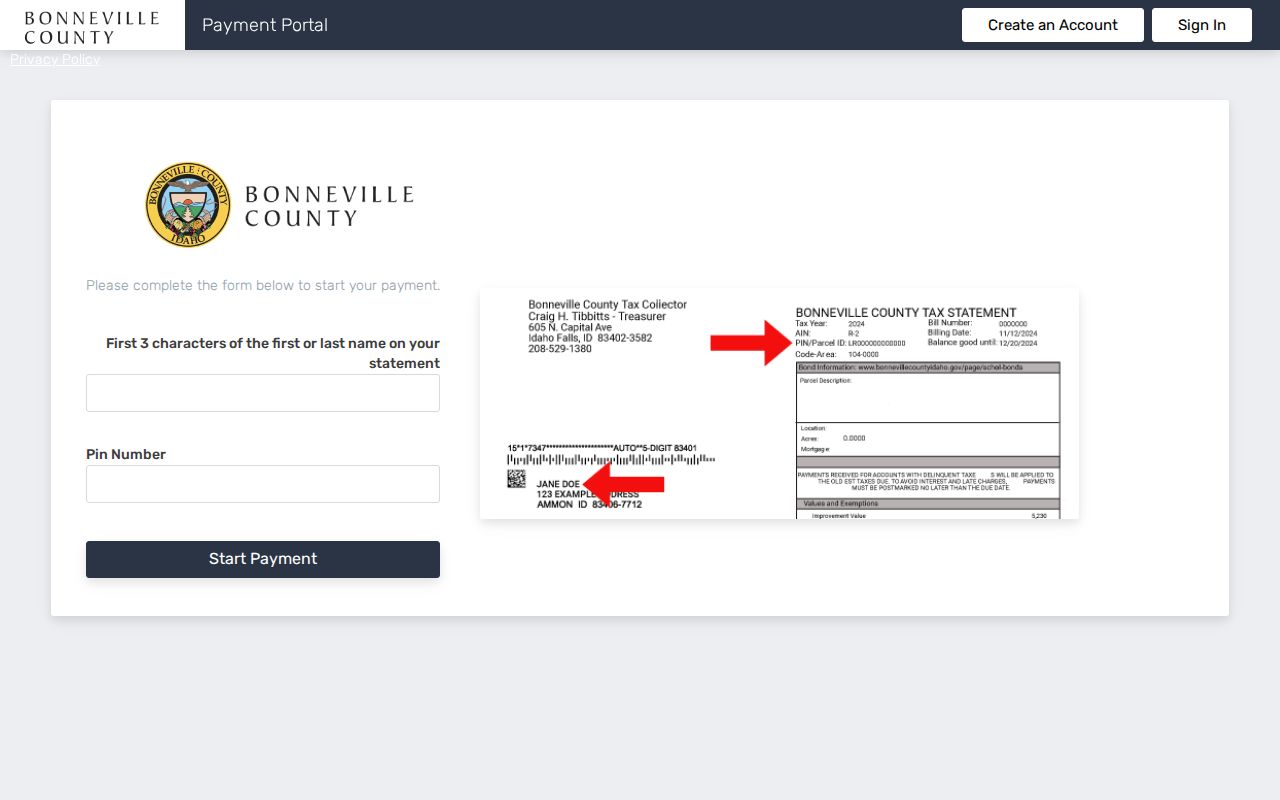
The captured screen identifies the payment keys; the live bill remains the current source.
December 20 and June 20 in Bonneville County
The official property-tax calendar sets December 20 for the first half. June 20 is the deadline for the second half. The calendar also slots assessment notices into the yearly sequence. It adds the ordinary fourth-Monday-in-June Board of Equalization appeal marker. Confirm the date for the current year, along with any weekend or holiday treatment. Check the live county calendar before relying on any single deadline.
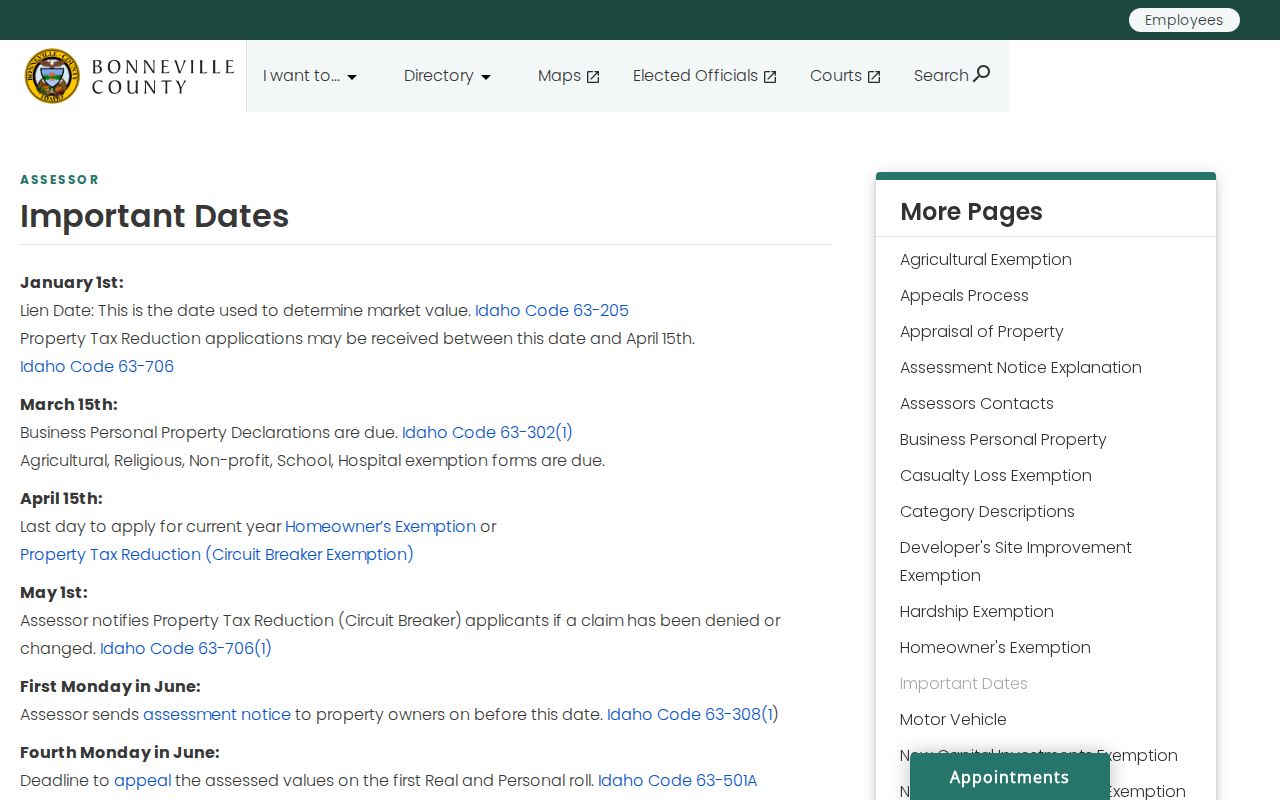
The calendar links valuation, notice, appeal, and payment timing without collapsing them into one deadline.
Bonneville Homeowner Exemption Records
The county homeowner-exemption guidance lays out eligibility and document requirements. It also explains recovery when an exemption was improperly received. An exemption touches only taxable assessment. It does not alter the deed, the boundary, or the base market-value analysis. A prior owner's record proves nothing about current eligibility. Confirm with the Assessor.
Keep the application, supporting documents, approval notice, and the first tax bill showing the exemption. If ownership or occupancy changes, ask the Assessor how the current rules apply. An old parcel card may reflect an earlier application. It cannot establish that a later owner qualifies. Nor can it show that the reduction carries forward unchanged.
Contest a Bonneville County Assessment
Start with an informal Assessor review. Identify the parcel, the disputed component, and any factual error. Gather comparable sales or other market evidence too. If nothing gets resolved, file with the Board of Equalization by the deadline on the current notice. The county treats the fourth Monday in June as the ordinary appeal marker.
Sort your evidence by the question it answers. Photographs and measurements speak to physical characteristics. Comparable sales speak to market value. Deeds and plats pin down the parcel itself. Explain any adjustment when a comparable differs in location, size, age, condition, or improvements. An asking price or a bare estimate will not demonstrate January market value. The tax amount alone will not either.
Appeal window. Check the current notice and county appeal instructions immediately; informal review does not preserve a missed Board deadline.
The official appeal page walks through informal review and Board routing. Follow its current instructions alongside the mailed notice.
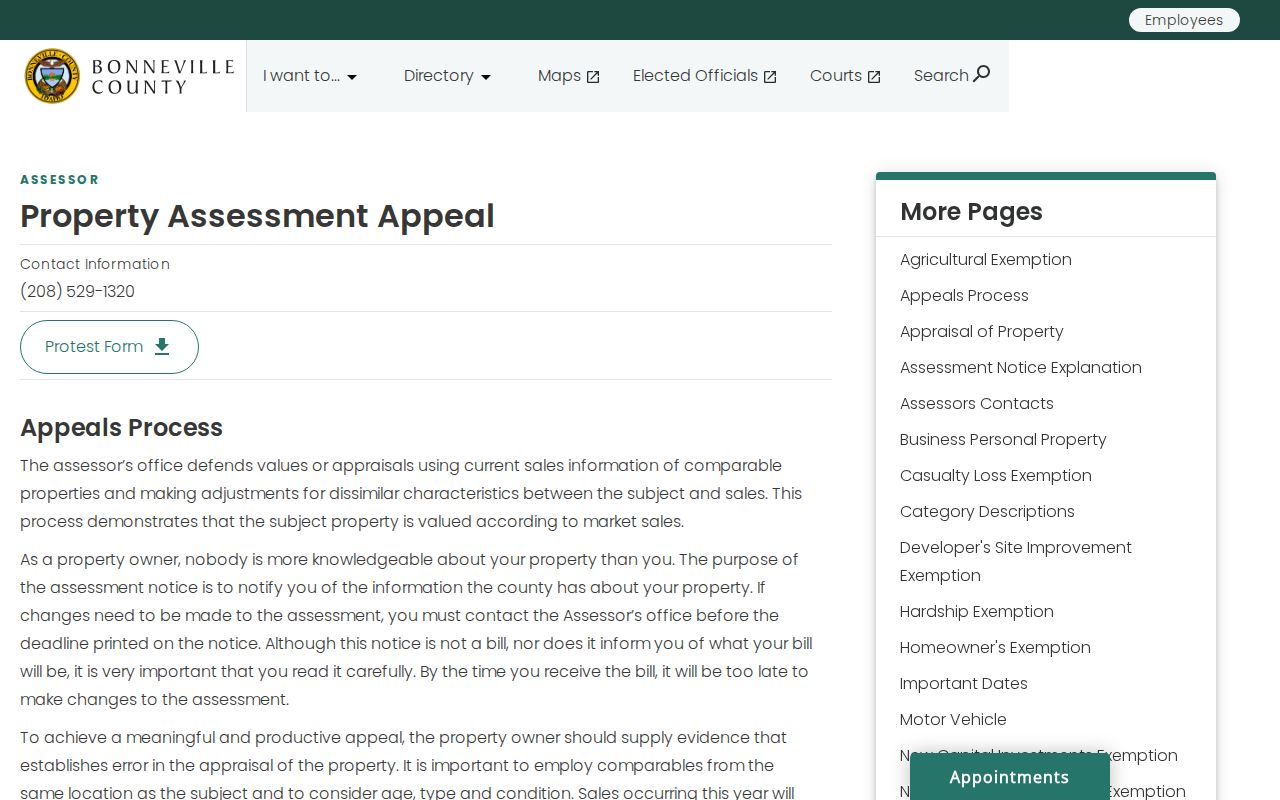
The captured instructions are orientation, while the current-year notice controls the parcel's deadline.
Delinquent Tax and Tax-Deed Notices
The Treasurer's FAQ walks through delinquency and the tax-deed process in plain terms. The sales notice page posts dated proceedings as they happen. A listing alone proves little. It does not confirm the parcel is still for sale. It never guarantees title or possession. Before acting, match the PIN, legal description, and tax account. Also match recorder instruments and any linked court case.
Save the sale notice whole. Keep its publication date, proceeding number, and scheduled event in one file. Add the redemption language, payment terms, and property description to the same file. Then watch for later notices and recorder activity. Postponement, redemption, cancellation, or deed issuance shows up there. A missing current notice does not erase an earlier recorded delinquency.
Tax-deed and sheriff-sale channels are not the same thing. A sheriff notice grows out of a court judgment. The Treasurer's process chases delinquent property tax. Neither promises clean title, possession, or freedom from encumbrances. Research the originating account or case. Follow the recorder trail instead of treating the notice as a conventional listing.
Reconcile the Assessment Notice With the Tax Bill
Lay the two records side by side by parcel PIN and tax year. They answer different questions. The assessment notice fixes the January value and appeal path. The bill layers on taxing-district levies, exemptions, and collection timing. The Treasurer's payment result reflects the account pulled by name fragment and PIN.
Names can mismatch. Recording lag often explains an owner-name mismatch. A value gap usually points to different assessment years or a corrected roll. Date each source before comparing totals. Never read the amount due as a market-value estimate. Never treat an assessment field as proof of payment. When a correction is due, send valuation issues to the Assessor and collection issues to the Treasurer. Use the same PIN and year in both contacts.
Request Tax Records Beyond Express Pay
The Treasurer holds bill and payment material. The Assessor keeps valuation, exemption, and parcel-roll records. For anything broader, Bonneville County accepts requests through JustFOIA under the public-record policy revised in 2025. State the PIN, situs, tax year, exact record, and the format you want. Name the document precisely. Say whether you need an assessment notice, property characteristics, exemption record, bill, receipt, delinquency record, or sale notice, and give a limited date range. Ask for public attachments when they matter. The county's general policy does not override a statutory copy fee or the Treasurer's ordinary account service.
A reconciliation sheet saves trouble. Put the source office beside each field. List the assessment date, land value, improvement value, exemption, tax code, installment, amount due, payment date, and status. That structure keeps an Assessor value from posing as a Treasurer balance. It also makes a discrepancy easy to describe.
Ownership changes need their own timeline. When a conveyance lands mid-tax-year, keep the deed recording date, roll date, and bill date together. The tax-roll owner can lag the transfer. That lag does not change the January valuation. Confirm the transfer through the Recorder, route value and characteristic fixes to the Assessor, and send collection questions to the Treasurer.
Appeal files can be requested too. Ask for the application, evidence, hearing notice, and decision when public, and for delinquency work request the bill, payment history, and any tax-deed notice for the exact PIN and year. A current Express Pay screen does not preserve every earlier event or attachment.
Note: A portal no-result should trigger a custodian request, not an assumption that no older record exists.
Keep the mailed notice and payment confirmation. File them beside the portal result, since those dated records show what Bonneville County assessed, billed, challenged, and received for that tax year.